Teaching Tips

17th November
2009
written by Erica R.

Salvador, Imad, Jonathan, Rita, Loi, Pierre, Ana, and Cruz. These are the names of just a handful of my ELL students. These are the names I think about often—the names of students who challenged, humored, and taught me in the classroom each day while I taught English as a Second Language at CSU Pomona. For five years I learned some of the ins and outs of teaching ELLs. For you seasoned teachers reading this, many of these tips will sound familiar. But for those just entering the teaching field, I hope to impart the little bit of wisdom I have learned from my multicultural classroom ventures.

A General Tip:
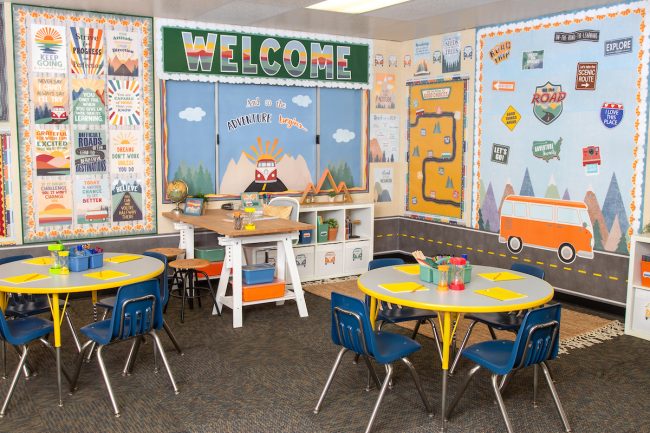
It’s true when people tell you that “Every day is a new adventure.” My mentor warned me of this prior to my first day of teaching, but of course I shrugged it off as nonsense. However, after the first five minutes of class, I realized how true it was, and I clung to the sentence the rest of my time as a teacher. I think what’s most important about this advice is that if your teaching isn’t adventurous (and if you’re not having fun), then your students won’t be on the safari with you. And what fun (for you and the students) is that?

The Specifics:
—Try to add cultural elements into your lessons as often as possible. Your students will love this! First of all, it shows that you respect their culture. Second of all, it’s automatically a topic of interest for them. And, finally, students in the class who aren’t of the culture you’re studying will become more culturally aware. I once talked about Chinese New Year after spending a summer in China. I brought in red envelopes and talked about how children receive these from their parents and relatives during this holiday. They are filled with money, and they represent a wish for a happy and healthy new year. This “lesson” only took five minutes, but it made my students’ eyes light up in appreciation.

—Try to speak slowly, but avoid speaking loudly. I used to always hear the “Speak slowly and loudly” tip before I started teaching. It’s rather insulting if you think about it. Your students aren’t hard of hearing, but chances are, they are taking notes. This is why speaking slowly is a good idea.

—Try not to assume that your ELLs don’t know the grammar rules. If they don’t know them, you’ll know because they’ll have questions, be taking notes, or do poorly on quizzes and/or tests. Instead, do a diagnostic paragraph (or request sample sentences) during the first class to see what the majority of your students have already learned. Then you don’t have to waste class time going over that material.

—Try not to give them too much drill work. If you can recall being in school, then I’m sure you remember how boring drill work was for you. And it still is! Instead, try giving them practical practice. For example, you can ask them to attend a baseball game (preferably a Padres game—they’re my favorite!), listen to some of the language used, and write down the sayings they hear (especially anything that has an unclear meaning). Then you can go over some of the sayings in class. You never know—some of them may be idiomatic (a perfect addition to a lesson)!

—Try to share some catchy tips with them, like mnemonic devices (e.g., FANBOYS). My mentor created a list of “31 Flavors of Instructional Verbs.” On this list, definitions and examples were given for thirty-one verbs. These really helped my ELLs whenever they were instructed to write paragraphs.

Remember to enjoy your journey in the land of ELLs, and if you happen to have a round-trip ticket, I hope you’ll pay me a visit and share with me your experiences and tips. In the meantime, enjoy the adventure!

5th November
2009
written by Ina L.

“So Many Books, So Little Time” is the saying emblazoned on my favorite sweatshirt. I feel this way about all the books I’d like to read. Being a voracious reader and belonging to a book group hardly slakes my thirst for books. Either reading a novel to or with my class was always the highlight of my teaching day.

Often I would choose a novel to read aloud to seventh graders. You’d be amazed at how attentive they were as they listened for about 10 minutes at the end of the hour. I’d usually choose something that had some action in it and something they could relate to. Hatchet was one of my favorites. One time I read James and the Giant Peach to them. They were truly mesmerized as they tried to visualize the giant peach flying through the sky.

Literature was my favorite thing to teach. I could get all kinds of fascinating conversations going when we read books like The Cay, Anne Frank, The Twenty-One Balloons, and A Wrinkle in Time. Activities that linked the books made them all the more interesting to the kids. They’d weave a place mat while blindfolded when we read The Cay and create their own tesseract for A Wrinkle in Time. I’d have them keep reading response journals and I’d read them periodically. It was gratifying to see how they enjoyed the books.

Right now I have Neil Gaiman’s The Graveyard Book on my desk waiting for me to read, and The Hunger Games by Suzanne Collins is in my briefcase. These are two books teachers tell me I need to read. I wonder if I were in a classroom if I would be teaching these. What else would I need to read? What are kids favorites as opposed to what is required? And is there a required book these days? So what do you think I should read? What about your students reading? What do you want them to read and what must they read? With so many books out there, maybe I’ll get a new sweatshirt that says “So Many Books, So Many Questions.”

19th October
2009
written by Erica R.

Each week at TCR, educational magazines are passed around to all the editors to keep us aware of trends, hot topics, and current research. It’s become one of our “eyes” into the classroom. Each magazine has its own focus, whether it be technology, literacy, or the like. And while some of the articles can have overlapping ideas, one article I read today put a new spin on an old idea. Little did they know, however, that their subjects included more than just students.

In “Focusing the Brain,” an article in Educational Leadership, Marilee Sprenger suggests that because students have multiple technological devices and often use more than one at once, they’ve become “passive viewers.”¹ Instead of thoroughly reviewing, absorbing, and then reflecting on information, students are skimming, scanning, and then quickly moving on to the next task. Sprenger illustrates this through Emily—an average teenager who is “focusing on her homework assignment.” Naturally, while researching the Civil War, she is listening to Coldplay, sending instant messages, answering her cell phone, and text-messaging. Sound like someone you know? Actually, it sounds like a lot of people I know.

Just the other night, I was sitting in my room with my laptop open, listening to Swell Season, reading recipes online for turkey brine, and answering my husband’s shopping list questions, all while watching Glee—well, sort of watching (but not really reading or offering many grocery options for my husband). It’s terrible! Last month I was reading Real Simple and was delighted to find a spoof on multitasking. The author, A. J. Jacobs, vowed to go “cold turkey” from multitasking for a month. Instead, he would focus on one task at a time. He called it Operation Focus.² Of course, more often than not, he failed (though, not without a valiant effort). We all do. How can we not? We’re surrounded by gadgets, people, TV shows, and, if you’re a teacher, activities, realia, and STUDENTS! You might be the worst violators of multitasking out of everyone (Be proud!). But, here’s the thing, if you can isolate the times that require focused attention and truly deliver, then it’s OK to multitask every other time. The key is balance. This is the lesson that has to be passed onto students. Remind them that it’s OK to focus on one idea at a time. Advise them to reflect after each time they’ve read something, so they can really absorb it. And if these don’t work? Banish the techno-toys! (Just don’t take mine away.)

———————————————————————————————————————————–

¹ Marilee Sprenger, “Focusing the Brain,” Educational Leadership 67, no. 1 (2009): 34–39.
² A. J. Jacobs, “How I Stopped the Multitasking Madness: One man’s quest to go from manic multitasker to Zen unitasker in one month flat,” Real Simple (September 2009): 198–202.

13th October
2009
written by Mara

In every classroom there is diversity in student abilities, teaching styles, and levels of interest. So how does any one teacher teach all types of students and meet all parents’ expectations? Not a clue! I did however learn a few helpful things while teaching Pre-K (the new K) that seem to hold true no matter what the grade level.

First, we all agree that we want our students to listen and learn, right? Well, parents and teachers need to do likewise; they need to listen to each other’s needs and goals (for the children) and find things that they can do each day to support them. Focus on what positive steps can be implemented each day.

What can teachers do?

Take small, constructive steps each day in the classroom. Build on what you know works.

• Set things up that are attention-getters. Create an inviting Creative Writing Center or a Game Area for skills practice. If students are excited to do one of the activities, they will look forward to doing more and will encourage others to participate.

• Ask parents to keep you posted on activities or topics their children enjoyed doing in class and try to incorporate them into the regular curriculum.

• Find out which things you do are most interesting to students. You might be surprised. It might be sharing stories about your own children or pets, or perhaps it was the goofy way you acted out a story. Did you solve a math addition problem using the grapes in your lunch? Find the elements of your teaching style that most engage students and build upon them.

• Determine the class leaders. Who seems to like order, remember rules, have a wide circle of friends, etc.? Let them be your first group leaders. Encourage and support them in guiding the rest of the class, rather than trying to do it all by yourself. (I distinctly remember a few students who could get the room in order in no time, hands on hips and all, and they were only 4 1/2!).

• Be patient with parents. When a parent points out a problem area, acknowledge their concern, briefly explain what is being done, and ask what he or she thinks might alleviate the problem, and if they can possibly help. You’d be surprised at how many parents are willing to help if asked to do a specific task.

• Finally, treat meetings (especially the problem ones) with parents like you would any business meeting in which you are seeking a positive result. Be calm, give input, and then offer possible, realistic solutions.

Hopefully, enough mini solutions will add up to build a stronger, supportive bond between parents and teachers and a safe, educationally sound environ for students at any grade level. Usually, getting a few enthused kids on board in the classroom is the same as getting a few parents on board. Every little bit helps, and every teacher feels better and more motivated when the positive feedback straggles in!

Previous
  • Most Used Tags

    activities behavior management classroom control classroom management classroom organization classroom setup classroom supplies Creative Classroom Ideas desk arrangement discipline techniques first post folders good behavior Halloween independent practice introduction lesson planning managing student behavior motivating students parent-teacher conferences parent communication reward ideas school supplies setting up classroom special ed sponge activities standardized test-taking standardized tests student behavior students with special needs substitute teachers summer learning susan winget teacher created resources teacher resources teacher supplies teacher tips teaching tips technology test-taking strategies test-taking tips test anxiety test preparation time management tips writing report card comments
  • Add to Technorati Favorites
    AddThis Feed Button
    Bookmark and Share